Mastering Event Email Marketing: Campaigns and Timing That Fill Seats
Mastering event email marketing is the single most effective way to put butts in seats. Learn how to sequence your email campaigns, write the perfect announcement email, build an engaged attendee list, and deploy last-call urgency to completely sell out your next event.
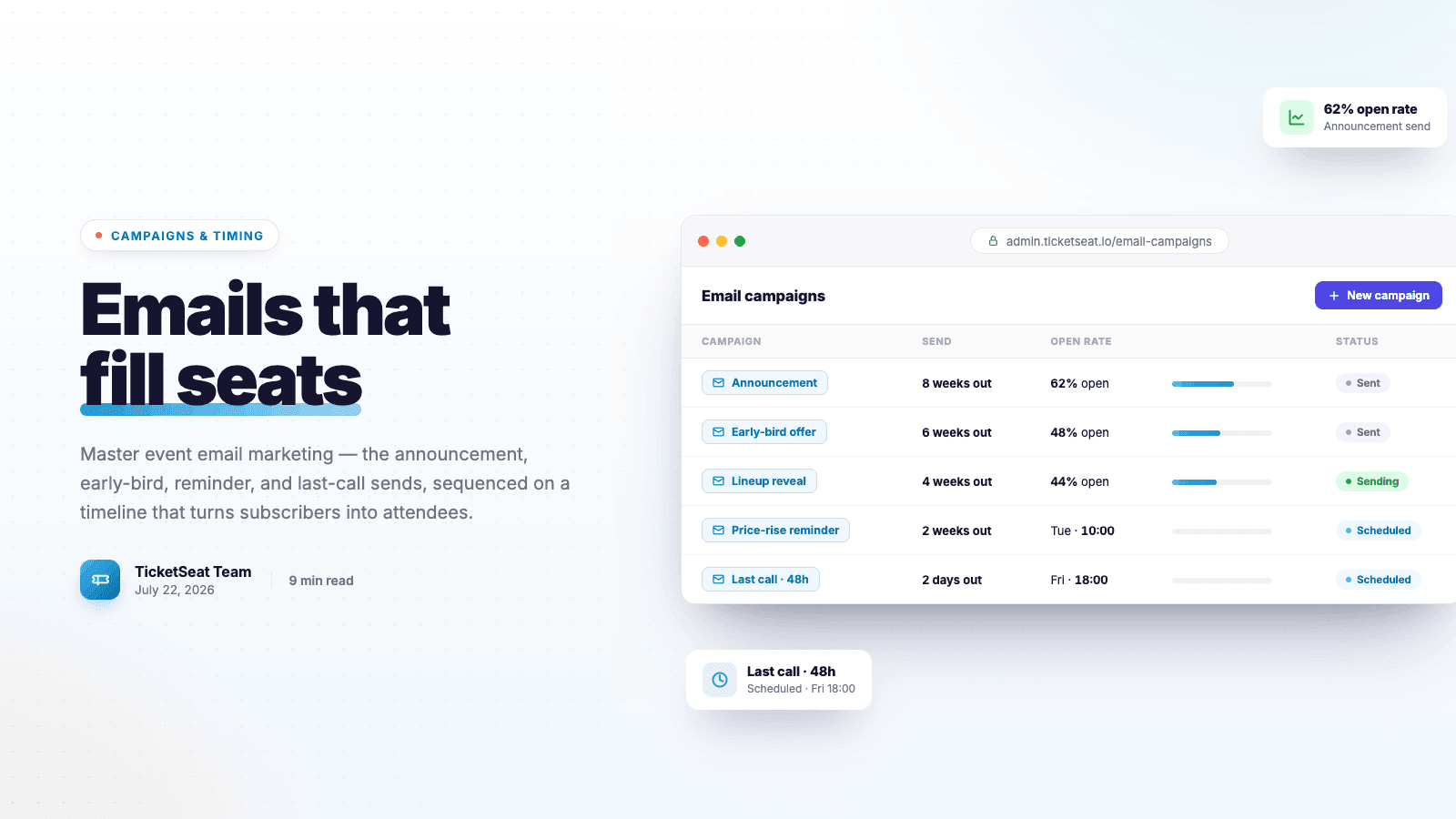
A successful event requires more than just booking a great venue; it demands a targeted strategy to put butts in seats. Mastering event email marketing is the single most effective way to communicate directly with your audience, build hype, and drive continuous ticket sales. By leveraging well-timed campaigns, organizers can cut through the noise of social media algorithms and guarantee that their most loyal fans are always strictly in the loop.
Why Event Email Marketing Outperforms Social Media
Many emerging organizers make the mistake of relying entirely on social media platforms like Instagram or Facebook to promote their ticket launches. While social media is a vital tool for discovery, it operates on rented land where algorithms ultimately decide who sees your posts. Organic reach has plummeted in recent years, meaning that even if you have thousands of followers, only a small fraction will ever see your updates.
Event email marketing, on the other hand, gives you direct access to the inbox. It is an owned communication channel. When you hit send, you can guarantee that the message is delivered. Industry benchmarks consistently show that email marketing drives a significantly higher return on investment (ROI) and conversion rate for event tickets than both paid and organic social media combined.
Building a robust attendee list creates an asset that compounds in value over time. Every time you host a new gathering, you immediately have an engaged audience ready to buy without needing to spend heavily on paid advertisements. For a deep dive into laying the groundwork for a successful launch, take a look at our comprehensive guide on How to Sell Out Your First Event: A Checklist for New Organizers.
Essential Email Campaigns Every Event Needs
To maximize your ticket sales, sending a single blast is rarely enough. A full suite of well-crafted email campaigns takes your prospective buyers on a journey, from initial curiosity to immediate action. The most successful organizers break their strategy into distinct phases.
The Save-the-Date Teaser
Before tickets even go on sale, you need to build anticipation. Send a teaser to your existing attendee list letting them know something exciting is on the horizon. Ask them to mark their calendars, but keep the core details slightly mysterious. You can even include a link to a VIP waitlist for early access to tickets, which helps you gauge early interest and segment your most eager buyers.
The Official Announcement Email
This is the big moment. The announcement email is arguably the most critical piece of your entire marketing sequence. It is the moment when the curtain drops and tickets are officially up for grabs.
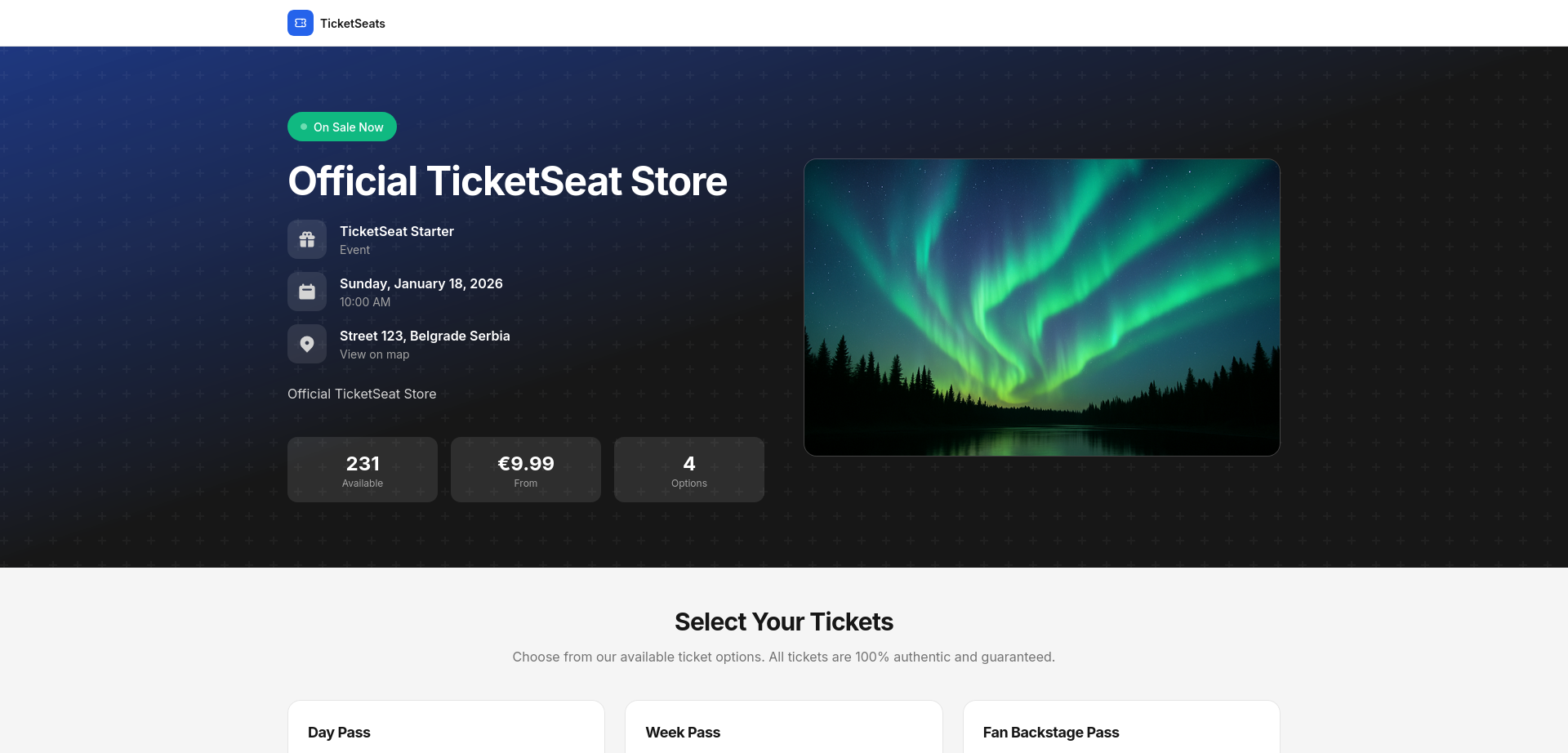
An effective announcement email should immediately highlight the value proposition: who, what, when, where, and why they absolutely have to be there. Include a strong, focused Call-to-Action (CTA) button that links directly to your ticketing page. Don't crowd this email with too many secondary links. The sole objective is driving traffic to your seating chart or checkout form.
The Nurture and Value-Add Emails
Not everyone who reads the announcement email will buy immediately. They need to coordinate with friends, check their schedules, or wait for payday. During the weeks leading up to the event, send "value-add" email campaigns.
Instead of just repeatedly asking them to buy tickets, share compelling reasons to attend. Introduce the keynote speakers, highlight the specific performers, showcase behind-the-scenes venue preparations, or explicitly mention your unique venue features. If you are using reserved seating, showing them a live preview of the map can heavily drive conversions. See our post on why Interactive Seat Maps: Boost Conversions 40% for more on leveraging layout design in your marketing.
The Last-Call Email
Procrastination is an event organizer's biggest hurdle. A significant percentage of your total sales will naturally occur in the final 48 to 72 hours. Your last-call email is specifically built to conquer procrastination by creating massive urgency.
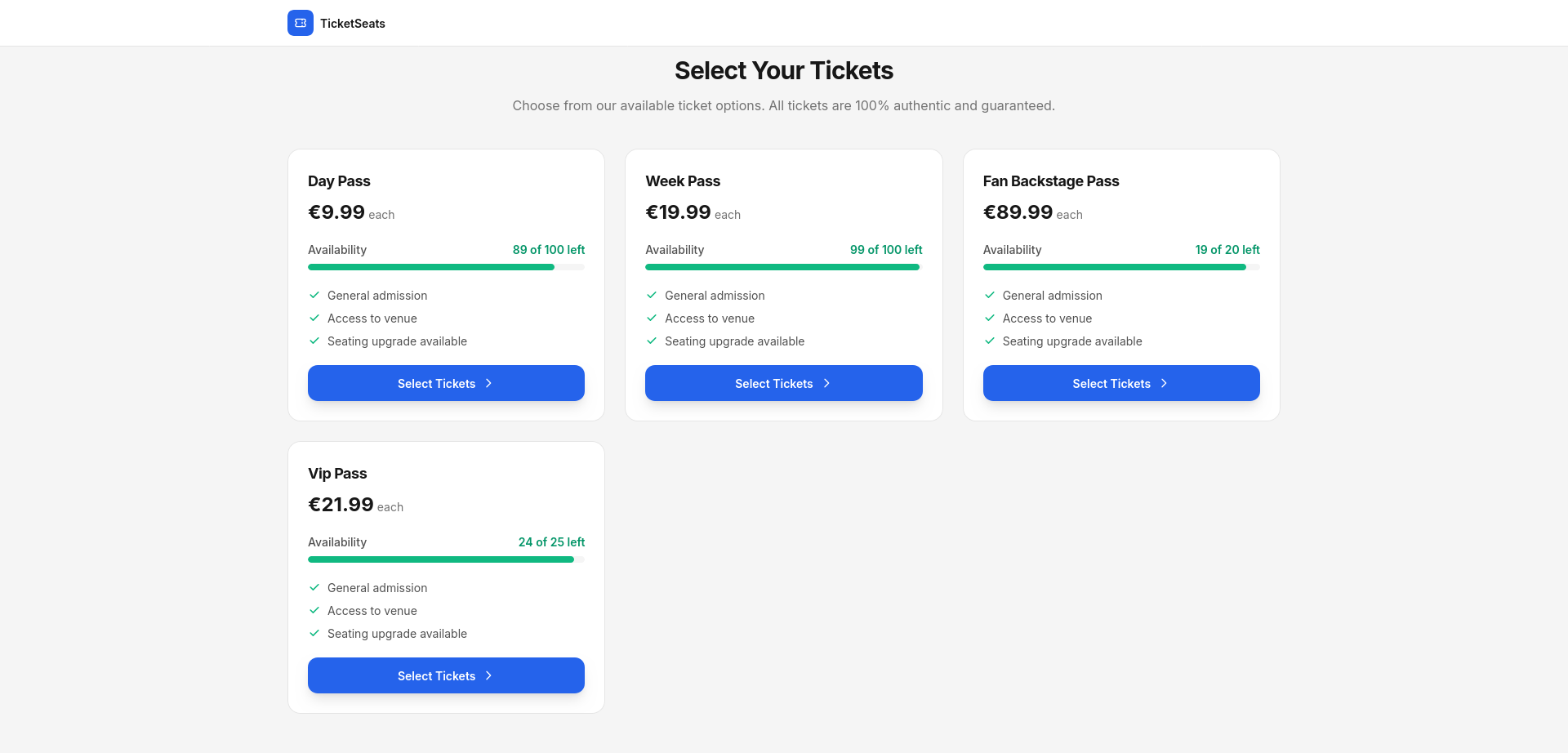
Keep your last-call email brief and punchy. Emphasize exactly what they stand to miss and lean heavily into scarcity. If you only have ten VIP seats remaining or GA is 90% sold out, state that explicitly. FOMO (Fear Of Missing Out) is an invaluable psychological trigger for fence-sitters.
Crafting the Perfect Send Schedule
Timing is often just as important as the copywriting. Sending too many emails can lead to high unsubscribe rates, while sending too few will allow your event to fade from memory. Creating a structured timeline ensures you remain top-of-mind.
Here is a quick benchmarking guide on how to sequence your event email marketing timeline:
| Campaign Phase | Ideal Timing | Primary Goal | Key Strategy |
|---|---|---|---|
| Teaser / Pre-sale | 6-8 weeks out | Build early Hype | Reward your existing attendee list with exclusive early access |
| Announcement Email | 4-6 weeks out | Drive immediate sales | Present a highly clear CTA pointing directly to your event landing page |
| Value / Nurture | 2-4 weeks out | Overcome objections | Share artist details, agendas, or interactive seat layouts |
| Last-Call Email | 24-72 hours out | Push immediate FOMO | Emphasize scarcity and the closing window for ticket sales |
Note: Timelines should scale based on event size. A massive 5,000-person music festival might require a 6-month runway, whereas a local workshop might run this entire sequence over just four weeks.
Growing and Segmenting Your Attendee List
The fundamental lifeblood of any event marketing strategy is your attendee list. It is impossible to execute high-converting email campaigns without an engaged list of contacts. But obtaining emails organically and maintaining list hygiene is an ongoing responsibility.
Collecting Emails Safely and Effectively
Focus heavily on capturing emails at every possible touchpoint. Offer lead magnets on your website, allow people to subscribe to your newsletter directly via social media links, and ensure that every past ticket buyer is automatically added to your primary marketing database (provided they opted in).
The Power of Segmentation
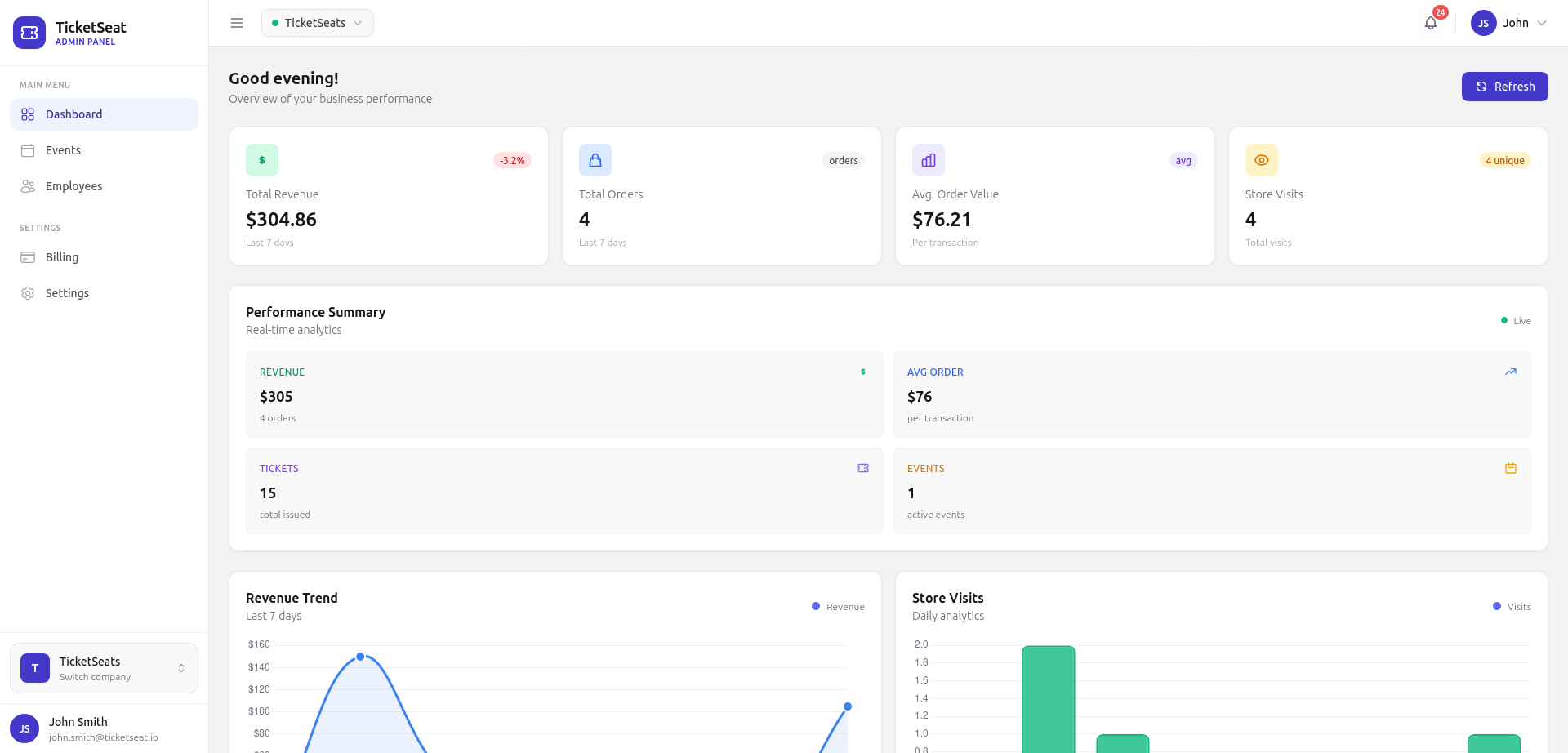
Treating your entire attendee list as one single blob is a massive missed opportunity. To properly elevate your event email marketing, segmentation is required. You can divide your contacts by past behavior, geographical location, or VIP status.
If you have a group of attendees who purchased the most expensive tier at last year's gala, they shouldn't receive the exact same general announcement email as a brand-new subscriber. They should receive a personalized loyalty message.
Similarly, segments allow you to deploy strategic pricing incentives. Coupling your email platform with targeted discounts is highly effective. Learn more by diving into our overview on Event Promo Codes: 7 Discount Strategies That Actually Drive Ticket Sales.
Best Practices for Maximum Deliverability and Open Rates
Sending beautifully crafted email campaigns doesn't mean much if they languish in the spam folder. To make sure your event email marketing is hitting the primary inbox, always adhere to critical deliverability best practices:
- A/B Test Your Subject Lines: The subject line is the gatekeeper. Test curiosity-driven subject lines against completely direct, literal ones. For an announcement email, clarity usually wins (e.g., "Tickets Now Live: The 2026 Summer Gala"). For a last-call email, urgency wins (e.g., "Only 12 Seats Left for Friday").
- Optimize for Mobile Viewing: The vast majority of your target audience will open your announcement email on their smartphone. Ensure that text sizes are easily legible without zooming, images load quickly, and CTA buttons are large enough to comfortably tap with a thumb.
- Use Clear Sender Names: Your audience will heavily scrutinize who the email is from before opening it. Make sure the sender name reflects your exact brand or the prominent name of the event organizer, rather than a generic address like "no-reply".
- Purge Unengaged Contacts: Regularly clean your attendee list. If a contact hasn't opened any of your past ten events' emails, remove them from your active list. High engagement rates signal to inbox providers (like Gmail and Outlook) that your content is valuable, keeping you out of the spam filter.
Frequently asked questions
What is a good open rate for event email marketing?
While benchmarks change slightly by exact industry, a healthy open rate for event campaigns sits between 25% and 35%. Anything above 40% usually indicates a highly engaged, perfectly segmented attendee list. If you fall below 20%, you should likely reconsider your subject lines or audit your list hygiene.
How many emails should I send before the event?
There is no one-size-fits-all answer, but highly engaging events typically run between 4 to 6 emails per campaign cycle. This includes the initial teaser, the announcement email, two or three nurture/value-add messages, and the critical last-call email.
Should I include promo codes in my last-call email?
Using promo codes in a last-call email can be remarkably powerful for filling up remaining GA zones. However, be cautious to not over-train your audience to always wait for last-minute discounts, which could hurt your early-bird full-price sales for future events.
How do I legally grow my attendee list?
Always use opt-in forms. Make sure ticket buyers check a box agreeing to receive promotional communications during checkout. Avoid purchasing third-party email lists outright, as they usually feature low engagement levels and can get your domain flagged permanently for spam.
Ready to launch your next event?
Setting up the perfect event email marketing flow works best when paired with an equally powerful, modern ticketing platform tailored for actual creators. Give your attendee list the seamless checkout experience they deserve with TicketSeat.io.
With our platform, you can effortlessly design interactive reserved seating maps or distinct GA zones in precisely minutes. Our intuitive drag-and-drop venue designer requires absolutely zero coding skills. We offer highly potent promotional suites including flexible discount codes, an integrated QR scanner app for fast entry, and comprehensive team permissions to seamlessly split up the workload.
Experience straightforward, flat, and transparent pricing with no setup fees and zero agonizing contracts. Plus, direct Stripe payouts ensure your revenue hits your bank account fast. And remember: if you are running free events, utilizing the platform is 100% completely free. Bring your venue to life with TicketSeat today!
TicketSeat Team
Sharing insights about event ticketing, platform updates, and industry best practices.
Related Articles
View all
How to Prevent Ticket Fraud and Scalping at Your Events
Protect your event revenue and attendees by mastering ticket fraud prevention. Learn how to stop duplicate tickets, implement QR validation, and combat scalping.
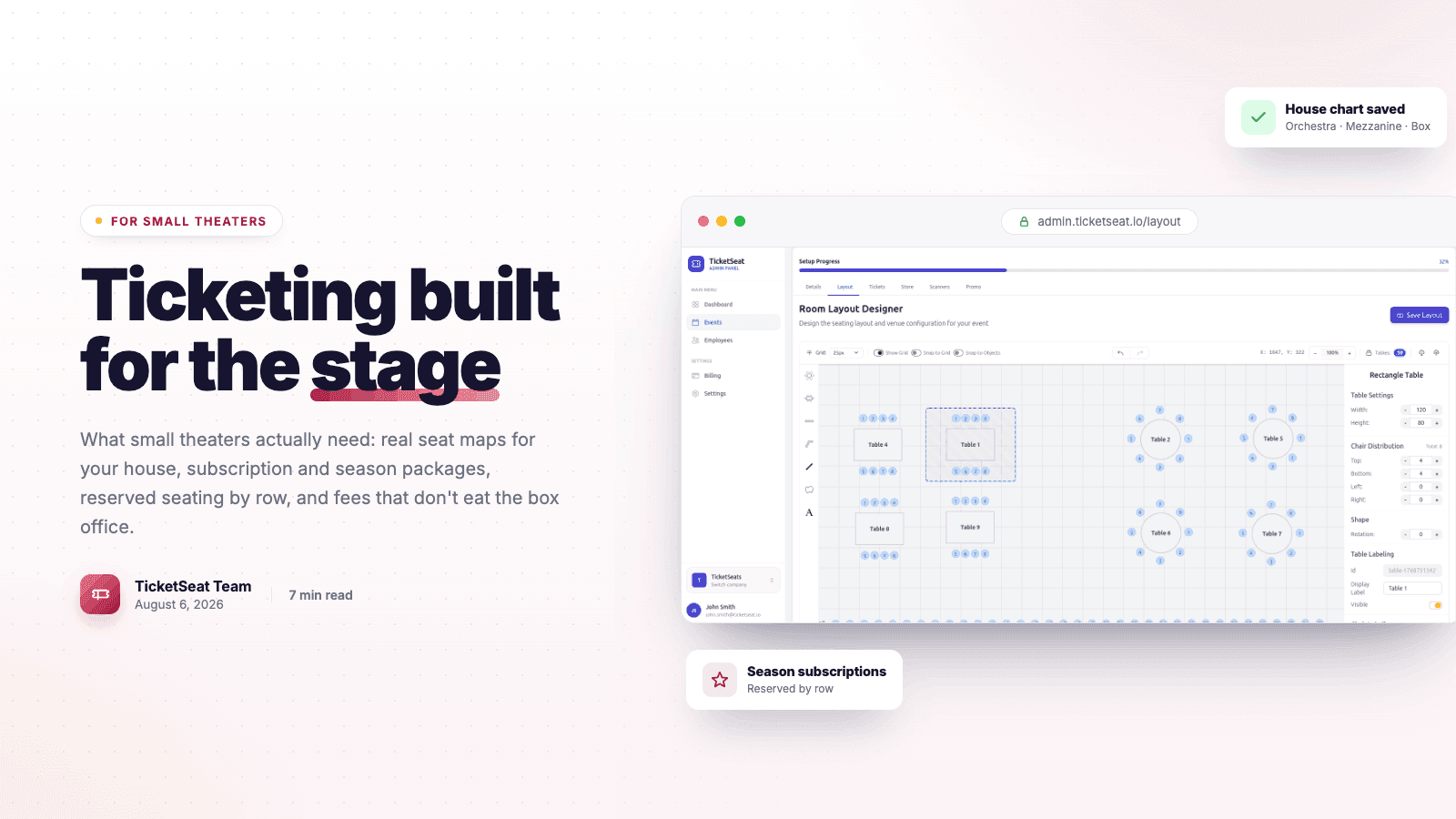
Theater Ticketing Software: What Small Theaters Actually Need
Finding the right theater ticketing software shouldn't mean paying for bloated features. Learn how small theaters can leverage reserved seating, intuitive box office tools, and interactive seating charts to boost revenue and delight patrons.
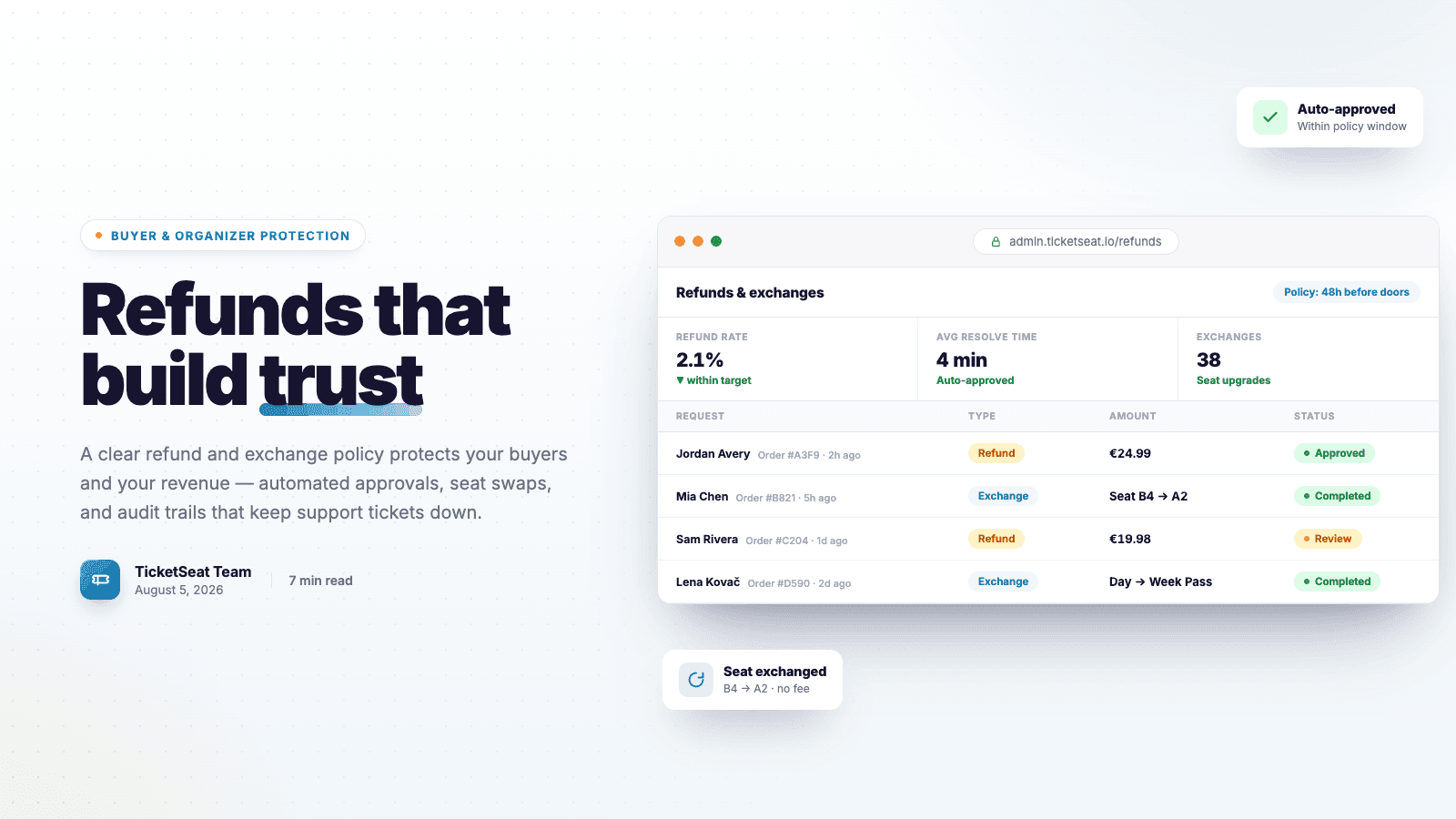
Ticket Refunds and Exchanges: Protection For Organizers AND Buyers
Learn how to write an airtight ticket refund policy that protects your event revenue. Discover best practices for handling refunds, processing exchanges, and preventing costly chargebacks.
Compare Ticketseat
See how Ticketseat stacks up against other ticketing platforms.
Ready to Transform Your Event Ticketing?
Join thousands of event organizers who trust Ticketseat for their ticketing needs.